An Evolution of Old Greenwich
Where modern architecture, art, and landscape come into quiet alignment, shaping a home designed as much for living as for looking.
Images by: Nick Johnson
Set along the waterfront in Old Greenwich, Connecticut, this newly constructed residence is both a departure and a continuation. The original home was a Stanford White structure. It once defined the property through its traditional form and a prominent circular stair that anchored the interior. After a fire necessitated a full rebuild, the project became less about reconstruction and more about reconsideration. It was an opportunity to rethink not just the architecture, but how the house would be lived in moving forward.
What remained was a single, grounding element: the original Stanford White boathouse, still intact on the property. Its presence offered a quiet point of reference, not something to replicate but to acknowledge. That distinction shaped the direction early on. Rather than revisiting the past, the new home embraces a modern architectural language. It fully engages the waterfront setting and supports a more open, contemporary way of living. This allows the property to evolve with the next chapter of its use.
Working alongside Joeb Moore + Partners, Prutting & Company Builders, and Reed Hilderbrand, Dunnam Zerbini Design approached the residence as a study in clarity, flow, and connection. Where the former structure leaned inward, this iteration opens itself outward. Expansive glazing frames the Sound. Interior spaces unfold with a natural continuity that feels both intentional and effortless.
The entry sequence sets that tone immediately as a large pivot door opens to a stone floor that extends beyond the interior, visually linking the house to the surrounding landscape. Rather than a momentary, defined point of arrival, the transition feels continuous, as an intentional blurring of inside and out that reinforces the home’s relationship to the water.
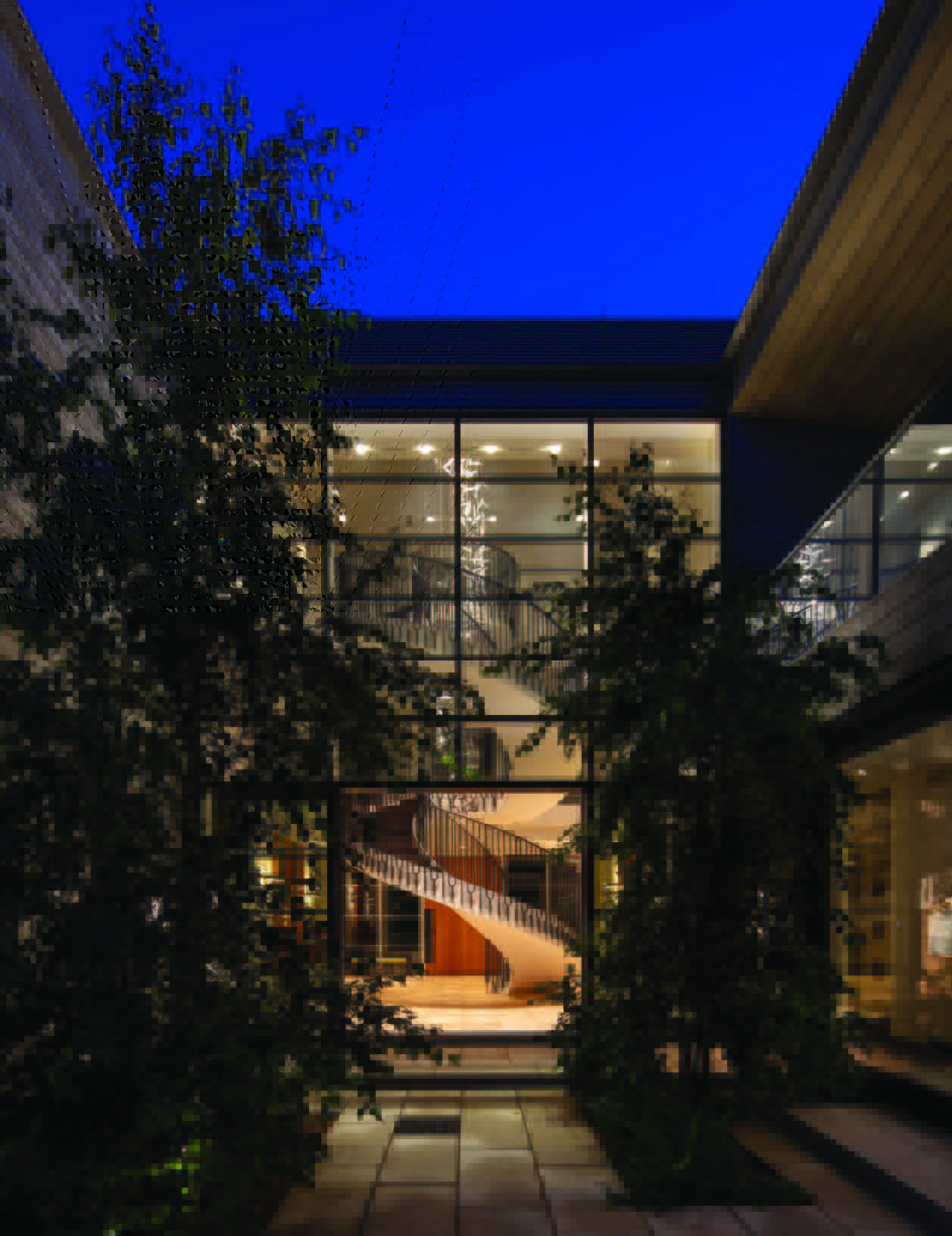
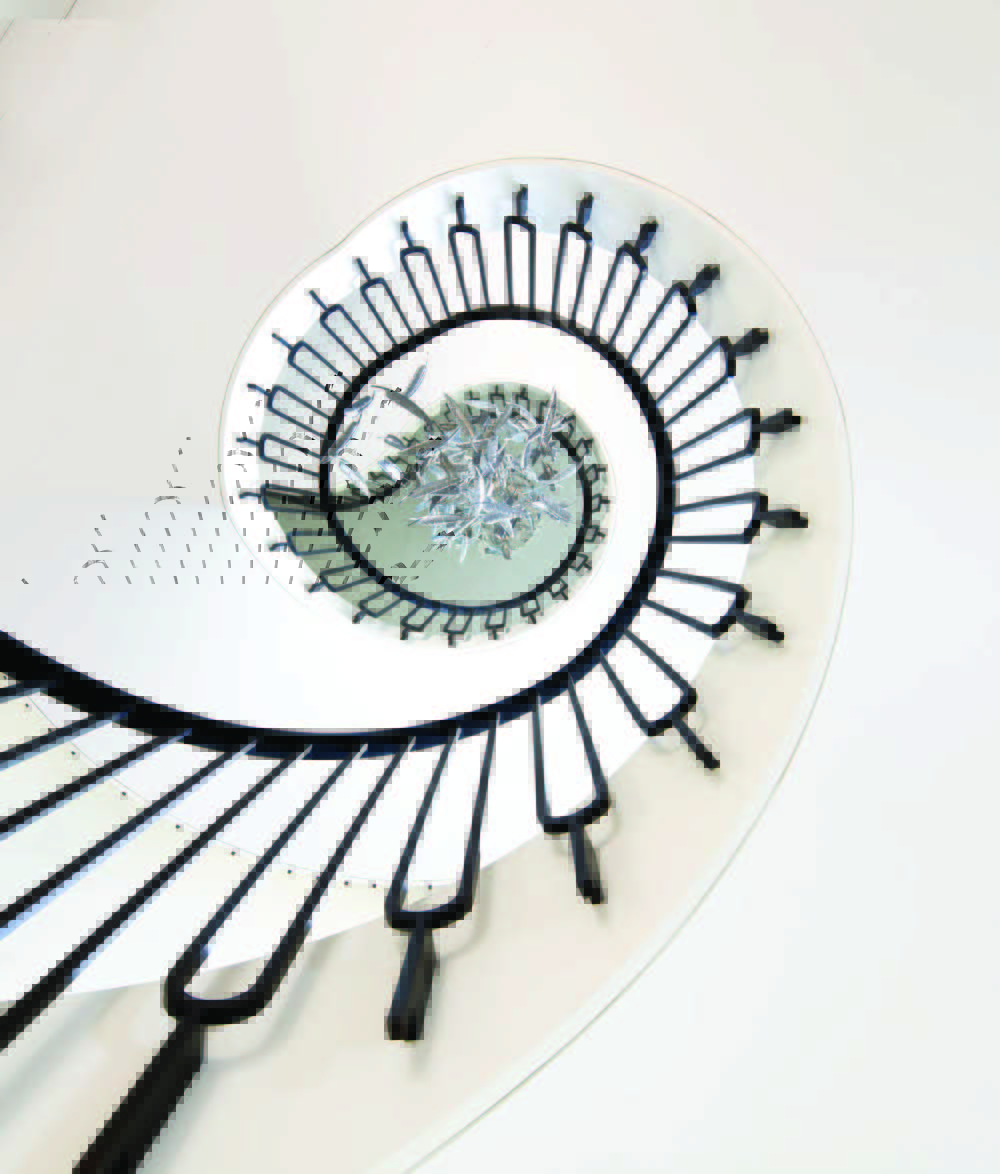
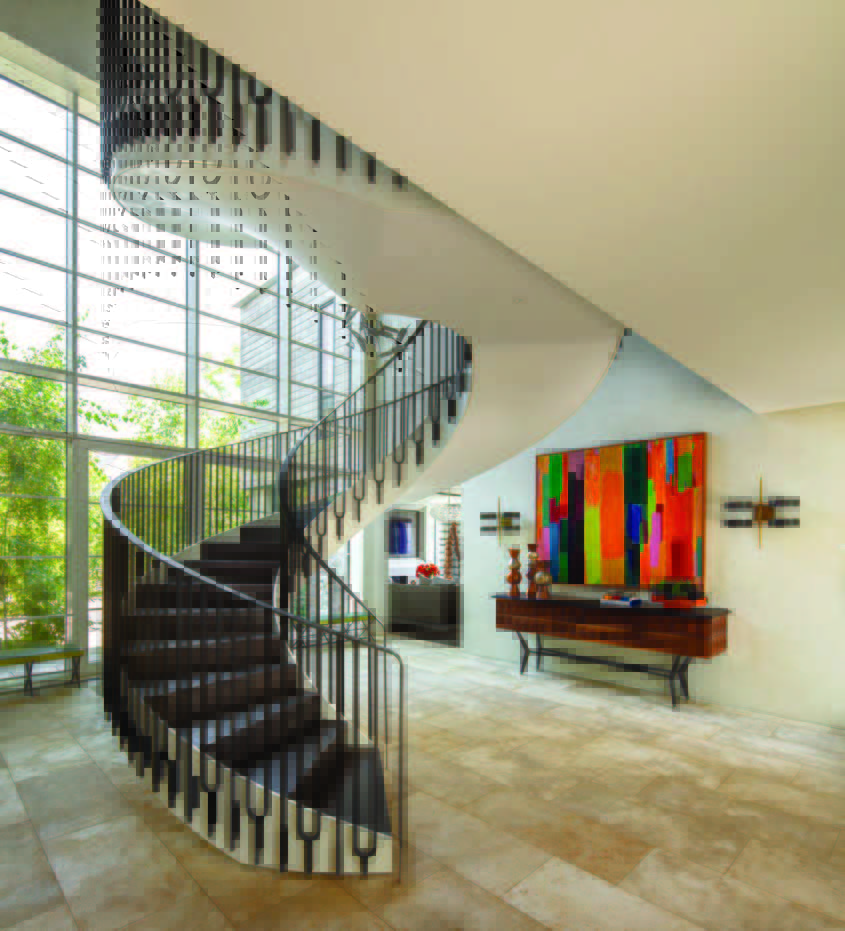
This sense of continuity carries into the home’s central volume. Here, a floating spiral staircase rises through a triple-height space. It pays homage to the original Stanford White stair in form, but not in expression. This new iteration is entirely modern, engineered as a steel structure fabricated off-site and clad beneath in seamless Corian. It reads less as a constructed element and more as a sculptural presence. Its weight visually dissolves as it moves upward.
“To get that kind of structure to feel like it’s floating on air, it’s unbelievable,” Arthur Dunnam notes.
Suspended within that volume, a custom-cast glass chandelier, designed by Dunnam Zerbini Design, introduces another layer of movement. Designed for vertical motion, the fixture spans nearly 20 feet, with delicate glass elements catching light at varying levels as one ascends the stairs. Coupled with the cascading LED lights integrated throughout the volume, this fixture is a subtle yet immersive moment that transforms circulation into an experience.
Working alongside Joeb Moore + Partners, Prutting & Company Builders, and Reed Hilderbrand, Dunnam Zerbini Design approached the residence as a study in clarity, flow, and connection. Where the former structure leaned inward, this iteration opens itself outward. Expansive glazing frames the Sound. Interior spaces unfold with a natural continuity that feels both intentional and effortless.
The entry sequence sets that tone immediately as a large pivot door opens to a stone floor that extends beyond the interior, visually linking the house to the surrounding landscape. Rather than a momentary, defined point of arrival, the transition feels continuous, as an intentional blurring of inside and out that reinforces the home’s relationship to the water.
This sense of continuity carries into the home’s central volume. Here, a floating spiral staircase rises through a triple-height space. It pays homage to the original Stanford White stair in form, but not in expression. This new iteration is entirely modern, engineered as a steel structure fabricated off-site and clad beneath in seamless Corian. It reads less as a constructed element and more as a sculptural presence. Its weight visually dissolves as it moves upward.
“To get that kind of structure to feel like it’s floating on air, it’s unbelievable,” Arthur Dunnam notes.
Suspended within that volume, a custom-cast glass chandelier, designed by Dunnam Zerbini Design, introduces another layer of movement. Designed for vertical motion, the fixture spans nearly 20 feet, with delicate glass elements catching light at varying levels as one ascends the stairs. Coupled with the cascading LED lights integrated throughout the volume, this fixture is a subtle yet immersive moment that transforms circulation into an experience.
Beyond that, the home organizes itself around the rhythms of daily life, particularly those of entertaining. The homeowners, who are frequent hosts with a deep appreciation for cooking, prioritized spaces that could accommodate both large gatherings and more informal, day-to-day use without feeling overly programmed.
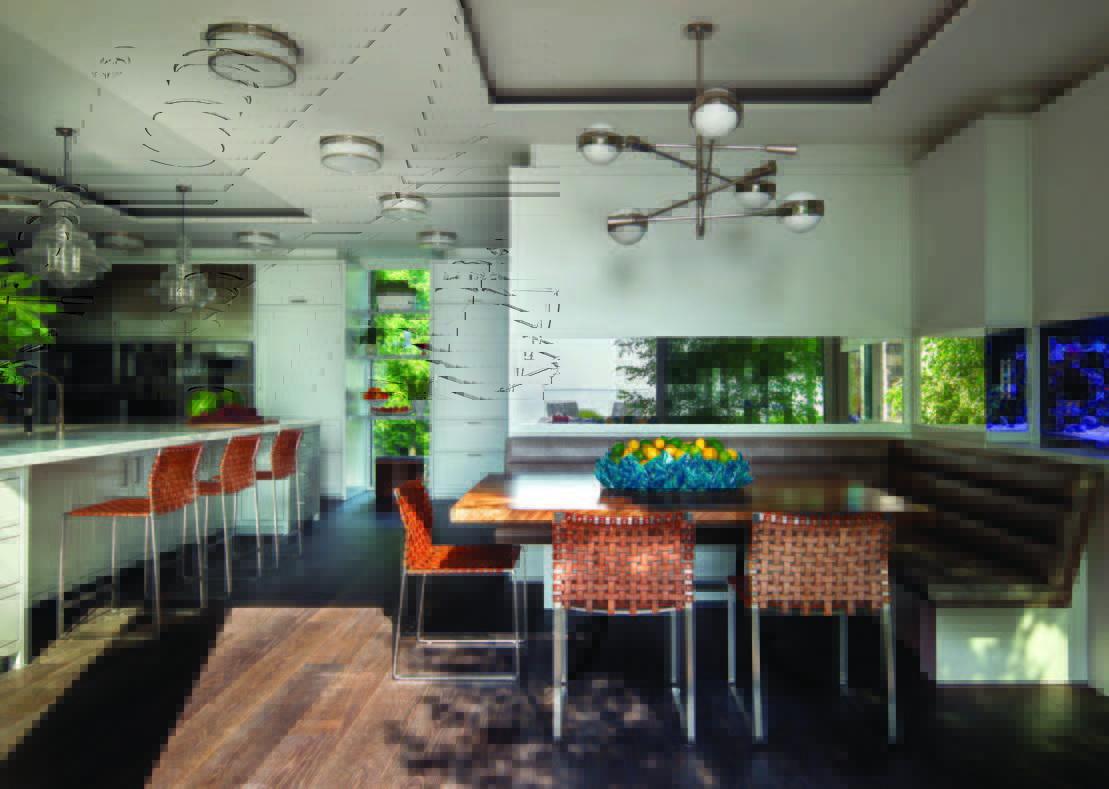
The kitchen reflects this balance. It is a highly functional space, generous in scale. As a true working space, the kitchen features a large central island with Mark Albrecht Studio stools. Tailored Hudson Valley light fixtures and woven textures complete the look.
“That is not for show,” Kelly Zerbini shares. “It just really operates.”
Adjacent to the kitchen, the dining spaces extend that flexibility without feeling redundant. The dual custom dining tables provide the best of both worlds. The secondary table near the windows creates a more intimate setting. It seamlessly combines with the primary table to accommodate larger gatherings. The two work in tandem depending on how the house is being used. The arrangement feels less formal than traditional dining rooms, yet more considered, and more aligned with how the clients actually live and entertain.
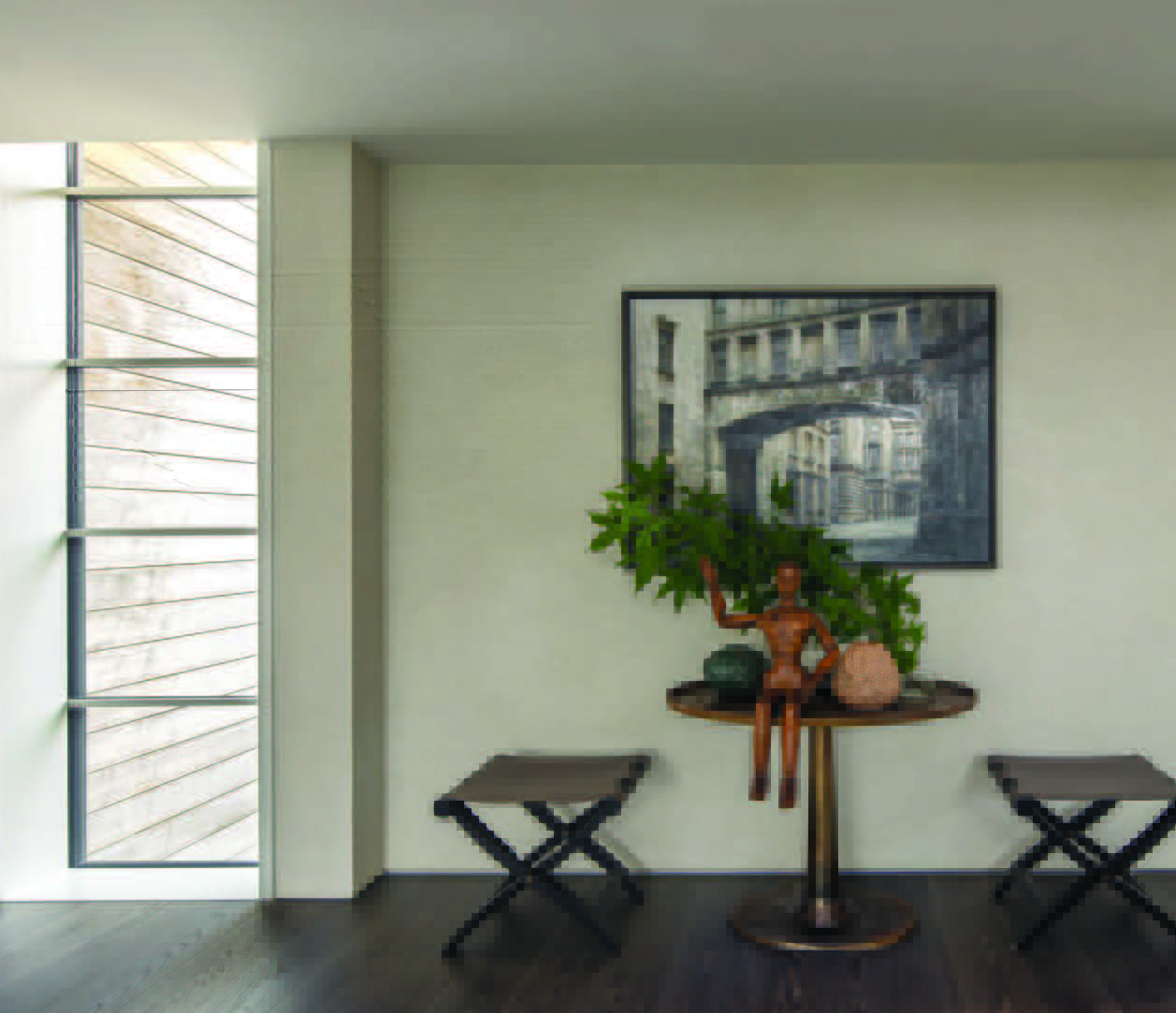
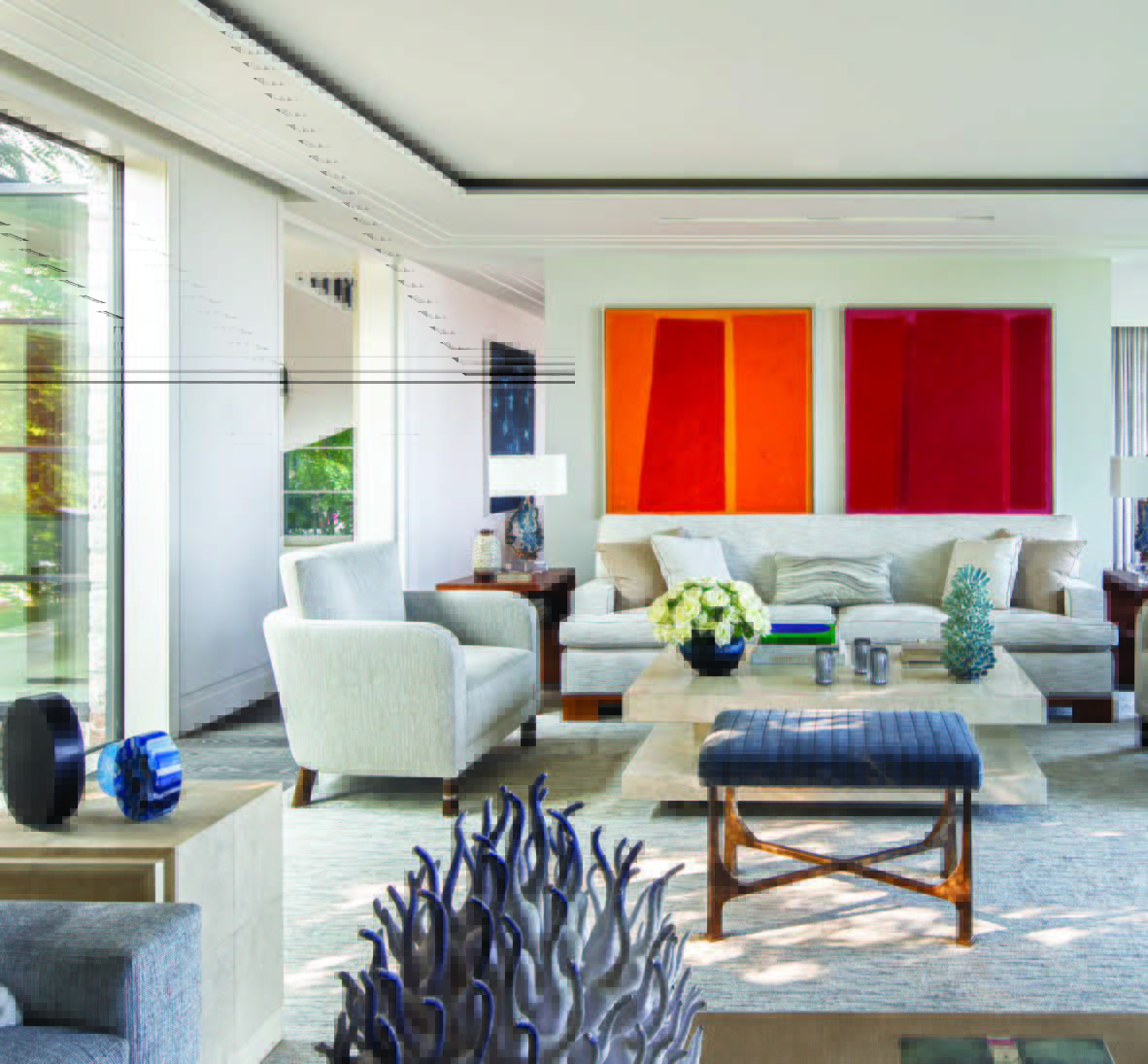
Throughout the interiors, restraint becomes a unifying strategy. The material palette remains intentionally quiet, with soft neutrals, layered textures, and subtle tonal variation creating a cohesive backdrop. Venetian plaster, cerused oak flooring, leather paneling, and tailored upholstery introduce depth without relying on contrast or pattern, allowing the architecture, the view, and the homeowners’ growing art collection to take visual precedence.
The homeowners’ collection, rebuilt over time, defines that framework. Instead of designing around specific pieces, the interiors became a neutral canvas that could evolve with the collection.
“The house was designed as a neutral envelope, allowing the art to really hold its own,” Zerbini explains.
That lets color emerge organically, rather than being prescribed.
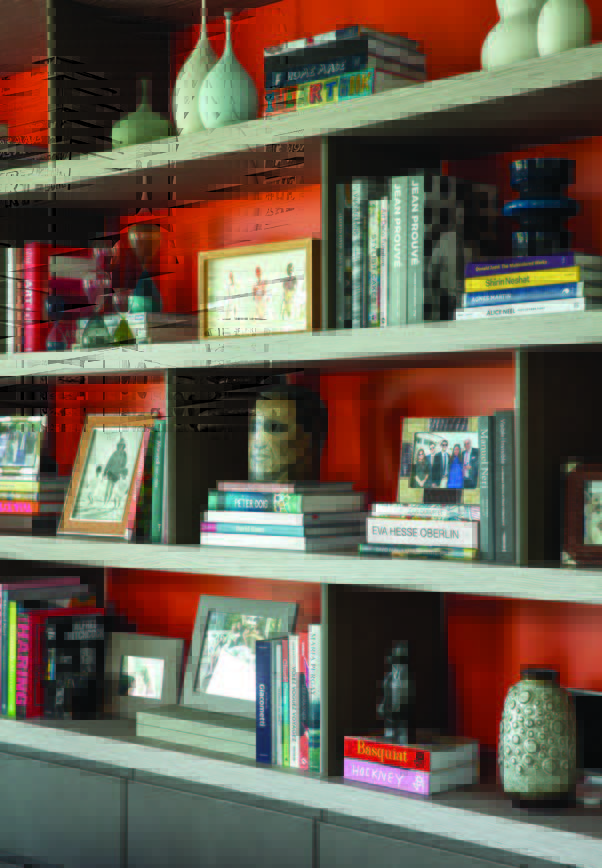
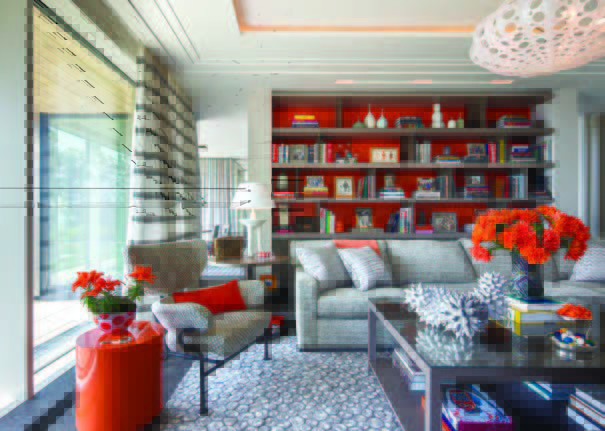
Nowhere is that more evident than in the family room, where a saturated Hermès orange introduces a deliberate shift in tone. Carried through custom shelving and select furnishings, the hue brings energy to a space with limited wall space for art, allowing it to hold its own without competing. Elsewhere, variation is introduced through material and form; from custom rugs and sculptural lighting to subtle shifts in texture and tone, creating visual interest while maintaining cohesion.
In the living room, the balance leans toward refinement. A leather-paneled fireplace wall adds a tailored layer of detail. Its topstitching shows how a quiet moment of craftsmanship can stand out in a restrained palette. Furnishings and accessories echo the tones of the art collection. This creates a dialogue between elements that feels composed but not overly coordinated.
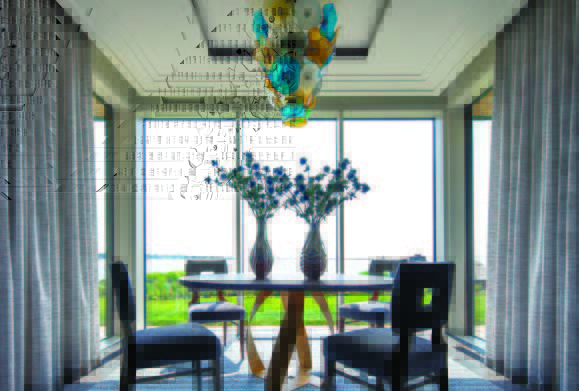
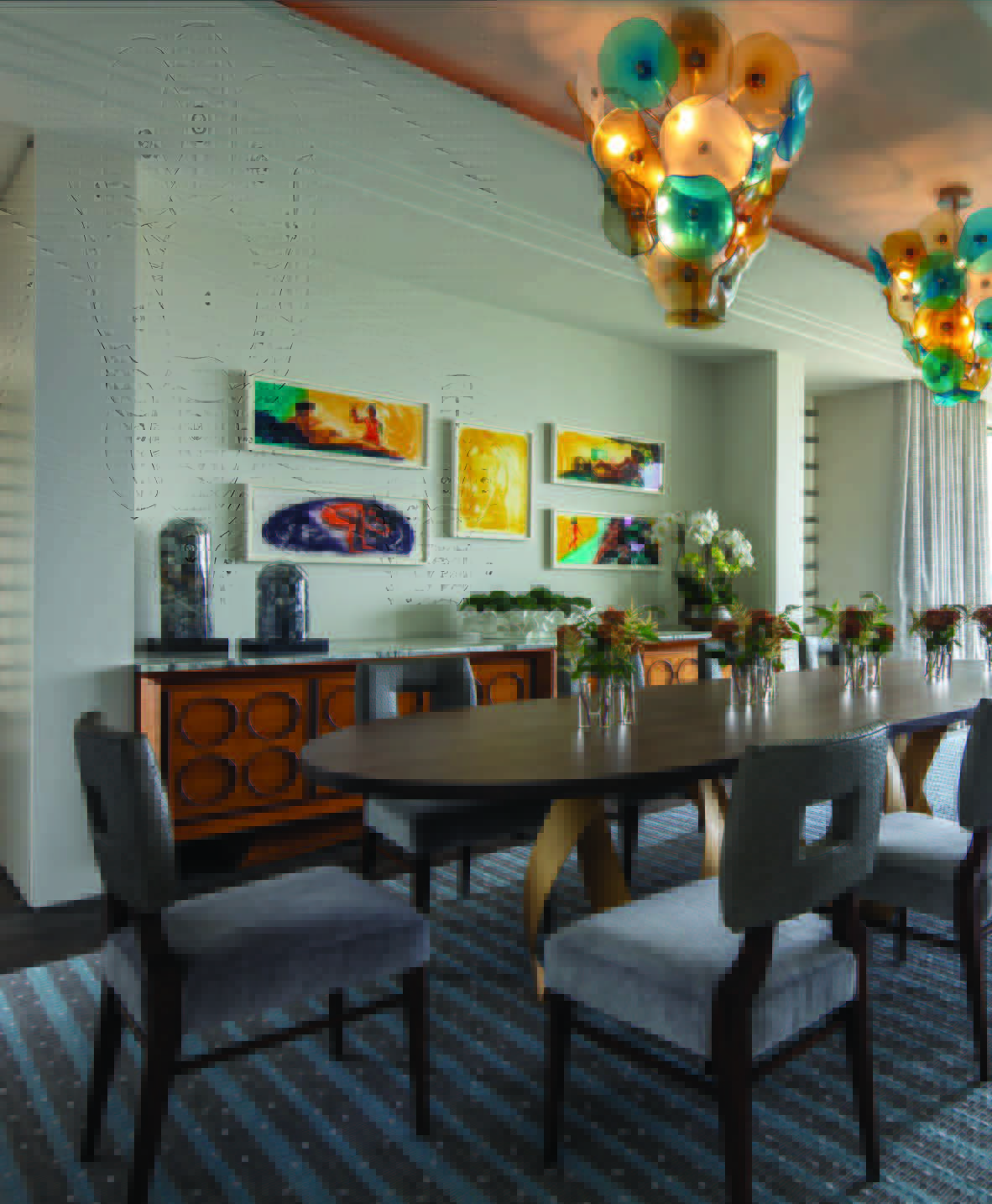
Custom Murano glass chandeliers continue this dialogue in the dining room, introducing color overhead. This is subtly reinforced by the palette in the artwork. The relationship between art, object, and architecture is intentional, yet feels less orchestrated than intuitive. This alignment reflects both the clients’ sensibility and the collaborative nature of the process.
Collaboration to create this home was second nature. The design evolved through ongoing dialogue, with the clients deeply engaged at every stage.
“We’re not at all dictatorial,” Dunnam notes. “We incorporate their thoughts and aspirations and dreams into the project. That’s why it sings.”
Resources:
Architect: Joeb Moore & Partners; Joeb Moore; Greenwich, CT; 203.769.5828; Builder: Prutting + Company; Dave Prutting; Stamford, CT; 203.972.1028; Landscape Architect: Reed Hilderbrand; New Haven, CT; 617.923.2422; Interior Designer: Dunnam Zerbini Design; Arthur Dunnam
and Kelly Zerbini; New York, NY; 212.707.8989
Related Articles
Related
Built to Evolve: A Home for Modern Family Living
Built to Evolve:A Home for Modern Family Living.| Written by DANIELLE PORTERWithin the Grey Oaks Community in Naples, Florida, architecture settles easily into a lush, coastal landscape. It is here that this reimagined residence unfolds as a study in balance, between...
HOME IS A FEELING:
Exceptional design begins long before colors, furnishings, and finishes. In this Expert Advice feature, Alex Thies of Adelyn Charles Interiors explores how understanding the way clients live, gather, and experience their homes creates spaces that are not only beautiful, but deeply personal, functional, and timeless.
SWIPE RIGHT: DEFINING YOUR IDEAL CLIENT
SWIPE RIGHT:DEFINING YOUR IDEAL CLIENTWritten by SHELLEY MCCORMICKThe Business of Choosing Well Designers spend years refining their aesthetic, their process, and their voice—yet far less time defining who they are actually designing for. The result is a familiar...